The Open Gump Foundation (OGF) builds and stewards the open Gump stack: identity, content, agents, and the licence that keeps them open.
Internet 1 is over
Internet 1 was a public square with a private toll booth underneath. You paid per seat, per request, or per month, and the price moved when the vendor decided it should. The code was never yours, the data was never really yours, and the exit was a migration project you did not budget for.
It worked long enough to become infrastructure. Then the rent went up.
The robots are here
The machines arrived while everyone was still arguing about whether they would. They read, they write, they call APIs, and they speak the language of man well enough to pass in a support queue.
That is not the problem. A computer that can read a manual is a computer that can use a documented service, and that is good news for anyone who has ever wired an integration by hand.
The problem is who holds the switch. A machine that speaks your language is still a machine you can turn off, as long as you hold the credentials and the hardware. The risk was never the intelligence. It was the rental agreement.
Internet 2
Internet 2 is the correction: open protocols, self-hosted services, and infrastructure that people and small teams own outright. No rented platforms. No gatekeepers. No enterprise SaaS tax on every layer of the stack.
The Web-4 age is where identity, content, and agents meet: public protocols, portable credentials, inspectable systems, and software that a person and a machine can both operate. That is the layer OGF is building for, and it is the layer the current internet was never designed to provide.
Internet 2 is not a product launch. It is a direction of travel, and the stack is how we get there.
Mission
Enterprise-grade tooling at the price of a coffee.
Self-hosting. Minimal external dependencies. Freedom from enterprise SaaS. Owning your own stack.
That is the whole pitch. The software should be small enough to understand, cheap enough to run on hardware you control, and open enough that no vendor can switch it off. We build the plumbing so the product can be the interesting part.
Since 1990
Gumpworks has been shipping software since 1990. The tools have changed; the position has not. Small systems, open formats, and code the operator can read. We were early to the web, early to self-hosting, and early to the idea that an agent is just another client with a credential.
We are not slowing down now.
GumpNet
GumpNet (gnet) is the first piece of Internet 2 we can point at. It is a network for the open Gump stack, built on hardware the foundation owns rather than capacity rented from a platform. The first goal is an 8x H1000 cluster, and the thermometer at the top of this page tracks it in public.
What OGF stewards
- GAUTH — open-source authentication: app users, scoped tokens, OAuth, and a management API. Source.
- GAI — the Gump AI agent architecture: vector representation, utility curves, and behaviour trees that compose into hierarchies and swarms.
- Gumpworks Content — the markdown CMS, file registry, and stable public addresses.
- The World Gump Licence (WGL) — the licence that covers the stack, including GAUTH and GAI.
How the pieces fit
The stack is deliberately layered:
- Identity is the first layer. Every person, app, and agent has a stable identifier and a scoped credential.
- Content is the second layer. Posts, pages, projects, and files have stable addresses and a predictable delivery path.
- Agents are the third layer. A service that a machine can use is a service with documented endpoints, explicit errors, and limits.
- The licence is the boundary. It says what you can do with the code, and what you have to keep open if you distribute it.
None of these layers requires the others. You can use the identity layer without the content system, or the AI runtime without either. The foundation keeps them compatible.
Governance
OGF is maintainer-led. The maintainers are the people with commit access to the repositories. Decisions are made in public issues and written down when they change the shape of the stack.
The rules are short:
- A change that affects the public API gets an issue and a written rationale.
- A change that affects the licence gets a public review.
- A change that affects security gets a private report first, then a public note after the fix.
Current work
- Keep GAUTH's token and revocation model documented and testable.
- Keep GAI's runtime and Unity package in sync.
- Keep the content system's file addresses stable.
- Keep the World Gump Licence readable and current.
Support the OGF
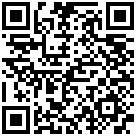
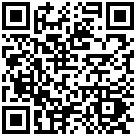
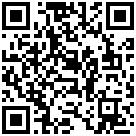
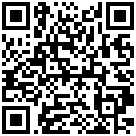
The foundation is funded by the people who use it. The donation addresses are in the thermometer at the top of this page; live tracking is coming. Every dollar goes toward hardware the foundation owns, starting with the GumpNet cluster.
Payments
The foundation accepts crypto donations at the addresses in the thermometer above: BTC, ETH, Base, and SOL. Gumpworks, the commercial arm, accepts the same assets for customer contracts, along with wire transfer, PayPal, and cash.
For a contract, email Tony@gumpworks.com and ask for an invoice. Do not send a payment against an unsigned scope.
Contributing
The fastest way to contribute is to use the software and file what breaks. The second fastest is to send a small, focused pull request with a test or a reproduction.
What we do not do
OGF does not run a support desk, sell certifications, or operate a paid tier. There is no enterprise edition, no per-seat licence, and no support contract that costs more than the software. Use the repository issues for bugs.
For commercial hosting, support, or a build, use Gumpworks services or email Tony@gumpworks.com. The foundation keeps the stack open; the shop keeps it running.